
Showing posts with label Oscar Nominations. Show all posts
Showing posts with label Oscar Nominations. Show all posts
Friday, 22 February 2013
The Oscar Round Up - Thoughts and Predictions [Updated]
This summary is not available. Please
click here to view the post.

Wednesday, 30 January 2013
[Review] Zero Dark Thirty - Into the Abyss
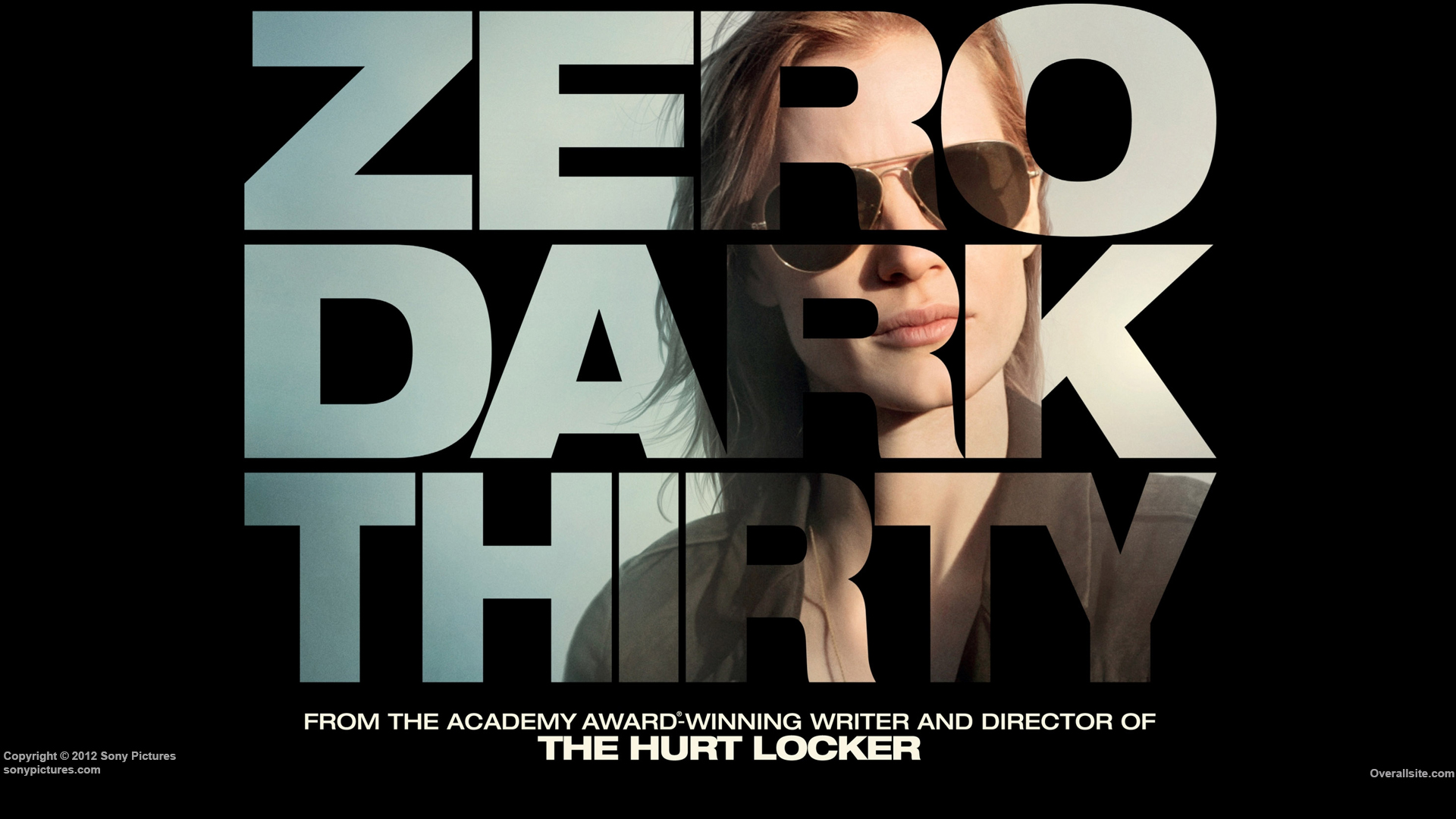
Director - Kathryn Bigelow
Country - USA
Starring - Jessica Chastain, Jason Clarke, Kyle Chandler
Running Time - 157 minutes
A chronicle of the decade-long hunt for al-Qaeda terrorist leader Osama bin Laden after the September 2001 attacks, and his death at the hands of the Navy S.E.A.L. Team 6 in May 2011.
War has changed. This is the immediate message of Kathryn Bigelow's Zero Dark Thirty. No longer won through soldiers and battles, but information and statistics. The line between civilian and target has been blurred. With the internet, events are instantly broadcasted across the world and public reaction has never been more foregrounded; facts, opinions and motives have never been more direct yet so fractured. It is the cinema that has most directly reflected and responded to the developments of conflict throughout the 20th (and into the 21st) century. We see it in the technology, from pulp glorification to the increasing desire to bring us as close to the 'reality' in the most aesthetically exciting way. We also, see it in the nature of the films themselves; the propaganda films of World War 2 against the anger from the films of 'Nam.
But Zero Dark Thirty has no such agenda. Bigelow isn't here to debate, but merely to depict. She looks to present the events (as far as contemporary knowledge understands them) accurately, but what she finds is terrifying.
But Zero Dark Thirty has no such agenda. Bigelow isn't here to debate, but merely to depict. She looks to present the events (as far as contemporary knowledge understands them) accurately, but what she finds is terrifying.
A movie about the hunt and eventual killing of bin Laden was inevitable, after all the actions of S.E.A.L. Team Six are virtually the stuff of action movie legend resulting in the first clear-cut American victory in a long time. During the decade long manhunt public and political attitudes changed as the US casualties increased and the ever increasing chase yielded no results. It was almost a complete surprise then on the 2nd of May 2011 when the news was broke that America had finally caught their bogeyman. It would set the tone for the second decade of the 21st century almost as much as the event that sparked the War on Terror had the first. So the existence of a movie adaption isn't whats surprising, it is the existence of this movie that is.
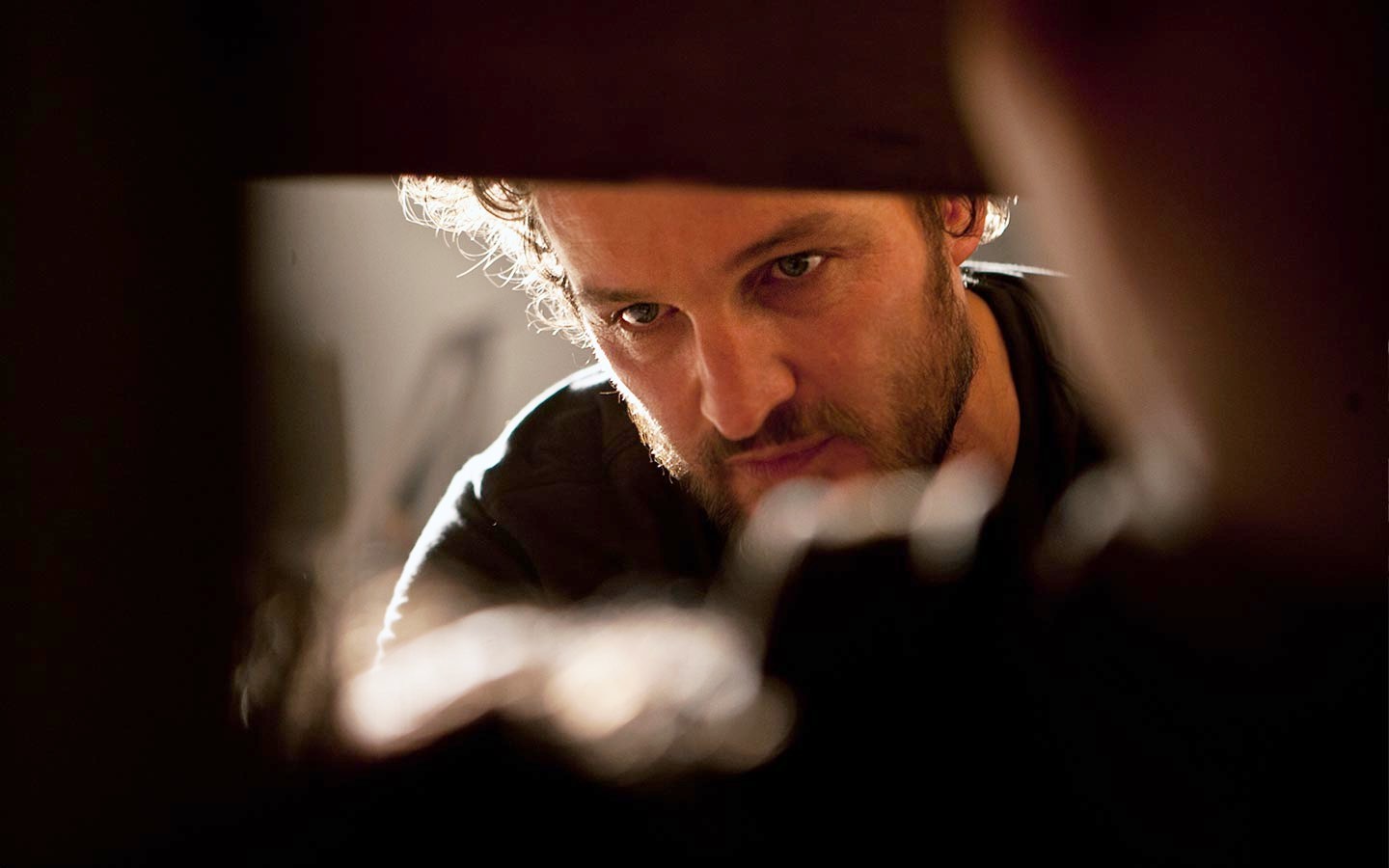
The film opens with a disturbing audio montage of recordings from 9/11, police reports and phone calls of those trapped in the towers. The impact only heightened by the lack of visual accompaniment as we are left to fill the identity of the people ourselves. The film then jumps two years ahead to a CIA base where Jason Clarke is currently in the process of torturing a detainee for information. This quick jump cut illustrates both the determination and the frustration of the CIA as the trail has run cold.
At this point enough has already been made of controversy surrounding the depiction of torture, and I am not going to spend much time addressing it, once again Bigelow only depicts. She detaches herself from opinion by refraining from concentrated editing patterns or camera angles (outside of a basic film making level) to criticize or approve. It is presented as the rest of the film is, and we can decide ourselves if it was necessary or not.
 We are then introduced to the agent known only as Maya, played by Jessica Chastain. The person on which she is based remains officially 'non-existent' but first hand accounts say the performance captures her intense determination. She is a fiercely driven woman, remaining one of the few who stay true to the search as the situation becomes more fragmented with independent cells and attacks acting throughout the world (including an frighteningly realistic re-enactment of the 7/7 London bombings.) Maya could too easily become a singular beacon for American tenacity, as her confidence and preservation do persuade her superiors and even the S.E.A.L. team themselves when it comes down to it. Yet, the film is no triumph and Chastain plays her remarkably human, but sure footed touch. At one point Maya guides her friend to safety after an explosion, only for that friend to be undone by having the audacity to trust later on. There are no movie fake-outs here. She claims later on that she was 'spared' to finish the job, but was she really? She accomplishes the impossible, but in the end she is left with nothing and no-one, just the empty seats of a helicopter and a ticket to anywhere in the new world she has created.
 Bigelow creates a sense of urgency by structuring the film like that of a serial killer, complete with maps, false trails and intense getaways. This is reinforced through erratic disregard for the cinematic space. Bigelow utilizes a variety of techniques with her camera, from surveillance style wide shots to frantic handheld close-ups. With no comprehensible rhythm to her editing nor consistency in her visual style we are given very little bearing as to our place in relation to the characters, the atmosphere becomes increasingly oppressive. It works to the same effect Stanley Kubrick achieved in The Shining (albeit through differing approaches) and is best illustrated in the films final act. We are given copious amount of information regarding its layout, yet the intensity of the raid is furthered by the labyrinthine complex. The comparisons with Kubrick's horror opus don't stop there; both fracture the passage of time through title cards and Alexandre Desplat's soundtrack is frequently portentously measured beyond it's genre.
 The raid sequence itself is surely to become one of cinema's most daring and incredible action sequences. As the helicopters depart they are illuminated by this brilliant midnight sun, it carries the apocalyptic taint to the proceedings as the darkness that has blanketed the films events now descends on the sky itself. The following assault plays out in terrifying silence punctuated only by suppression fire and breach charges. It defies cinematic code by presenting an action sequence that is directed by such a flat reality. The death of bin Laden is so brutally quick it offers us no catharsis, there is no final confrontation or dramatic stand off, just a flash and a bullet. 'Don't you realize what you just did?' states one soldier, 'I just shot the guy on the third floor' he returns. Without so much of a cheer, they turn their attention to gathering as many hard drives and file cabinets as possible before they must make their escape. This is a war won on information and statistics, not heroes.
With Zero Dark Thirty Bigelow has presented us with the death of bin Laden as the death of the old world. Those ideals we sought to protect have been so, but the cost has left a scar across those who fought for them. Their wounds have been transported to us all through the increasing reach of the internet. Through her purely apocalyptic vision Bigelow's film is also a destruction of the action movie too, how can one look to the over excited fetishism of recent action movies knowing they lack the dull silence of reality? The result is one of the best and most important American films in years, and one that will surely be preserved as a cinematic and contemporary artifact. It leaves us with one unsettling question; at what cost?
5/5
Monday, 28 January 2013
[Review] Django Unchained - Tarantino-bound
 Django Unchained (2012)
Director - Quentin Tarantino
Country - USA
Starring - Jamie Foxx, Leonardo DiCaprio, Christoph Waltz, Samuel Jackson
Running Time - 165 minutes
With the help of a German bounty hunter, a freed slave sets out to rescue his wife from a brutal Mississippi plantation owner.
There are few things less certain than the fact that Quentin Tarantino loves movies. He loves watching them, talking them and above all else making them. Beneath his signature excess lies a keen understanding of the codes by which film operates. He blends genres, reinvents archetypes and undermines the expectations of his audience constantly through the course of his films. I, for one have always sat at odds with him, on one hand he is clearly a very talented and intelligent director making some of the most original American works of the last two decades, on the other, I can never tell who he is making these films for.
Now with the release of his newest film, the Quasi-Western Django Unchained, it seems I have my answer; himself.
Tarantino structures Django much like his previous film Inglorious Basterds, blending pulp and genre pieces thickly layered in visual and audial references to a varied collection of influences. In this case blaxploitation meets spaghetti western, taking its title and main character from the Sergio Corbucci film Django, who's star makes a cameo. We open with a shackled and scarred Jamie Foxx led (along with a number of other slaves) by traders through a forest, when they are approached by Dr King Schultz with his wonderful dentist coach. He confuses and enrages the slavers with his turn of phrase, so when they refuse his sale, things turn violent. Schultz is a dentist turned bounty hunter and he needs Django to identify his next targets as he will come to explain.
Embodying his title, Tarantino's camera is equally free as he traverses the landscape by any means possible. Incorporating decades of Western film making legacy into every frame, the film is a visual feast of close-ups, cheeky zooms and gorgeous vistas. Django is a confident beauty of a film dripping but it never amounts to anything but homage. Think of The Assassination of Jesse James by the Coward Robert Ford which adopted it's melancholic atmosphere into it's visual tone, or Hillcoat's The Proposition which was shot with such blistering colours that it was often hard to look at. Django, for a film built upon anger, is far too preoccupied with honoring its sources, and obnoxious music choices doesn't help matters either.

The crux of the matter is Tarantino is not a director capable of understanding such anger, he engages with it only through his violence, this would be more of a problem if he didn't do it so well. This is, after all, a Tarantino film. He applies differing styles to the scenes, it becomes textual; the violence aimed towards blacks are shot in close-up, with highly saturated film stock, giving it a more visceral edge, including a horrific Mandingo brawl. Whites however are blown to smithereens in a ballet of blood and guts. The intention is clear, he wants us to get angry and then he wants that anger to force every bullet harder than the one before. The problem is he never stops to question how or why.
Slavery is constantly the subject of conversation, but it is just text, there is no judgement as to its nature nor a reflective note on it's repercussions. Tarantino is fascinated by his ideal of marrying the classic American image of freedom, the cowboy, to the horrendous crimes committed against the black people culminating in a violent revenge flick that he doesn't feel the need to give us anything more. It is a clever idea, but it lacks the depth to make it truly warranted.
Instead we are given wit and style in abundance, they satisfy on a surface level, supplying laughs and cheers as needed. Ironically for the title, Foxx is rather restrained. He is given a lot to do and chooses to play it through his physical performance, and the result is surprisingly endearing. Waltz is absolutely wonderful, nailing every line with his trade mark European accent. Whilst DiCaprio's vile, horrific Candie is a stylishly presented cartoon of a monster. Clearly both actors are having a total ball on screen and they manage to carry the film's plodding script even when it drags most.
Despite the sheer smugness in his performance DiCaprio is far to easy to hate for him to be the films main vocal point. This is not the result of writers error, but rather Tarantino's most clever move, the real villain here is Samuel Jackson's Stephen. 'Head house slave,' he is sneaky and observant but above all else he is an exploiter; one who condemns his own race for a favourable position with 'the master.' The contempt held by Tarantino for this character spills into his framing with excessive close-ups capturing every wrinkle in his grotesque grimace. He is not only the most important character in Django, he joins the ranks of modern cinemas most horrific and loathsome characters and his untimely demise is a moment of sheer cinematic catharsis.

At 165 minutes it is simply too long and too limited. Tarantino is regarded for his bloated dialogue-heavy sequences and Django is no exception. However, whilst each line is written with trade mark wit, to an almost distracting degree, it never goes anywhere or says anything about the events or characters. This is hindered further by the films structure, with the final act bringing the proceedings to a crawl, and by the time Candie's hack-saw orthopedic lecture came about my eyes were sore from the rolling. The inevitable explosive finale becomes something more of a relief, than an exciting climax. Speaking of which, the film has a fake-out jump cut that had it stayed true would have undermined the audience's expectations and provided a surprisingly sombre commentary on the nature of violence and revenge. Instead, Tarantino can't resist showing us more, and it sinks back into the fairly one-note story that only he is truly invested in.
Django is crippled by its bloated arrogance, Tarantino's indulgent style constantly undermines his thematic message. The result is a clever artist who is much more interested in showing off the grotesque nature of slavery than making a judgement on it - except for Samuel Jackson's Stephen, the films singular export. However the rest is relegated to surface level thrills that lack the brooding rumination of his spaghetti influences. Marred by pacing inconsistencies, only exasperated by it's gratuitous length. Django Unchained survives on the strength of its actors and of the determination to satisfy with wit and violence, and that it does.
3/5
Subscribe to:
Posts (Atom)