Happy Halloween! I may have left it to the last minute, but here are ten of the Image Loft's favourite alternative horror films. There are certainly a lot more obscure lists out there, but if you want something a little different from the usual humdrum in the cinema, and have seen the classics, here are a few well worth checking out to get you in the spirit.
1. Vampyr
Carl Theodor Dreyer
1932
Dreyer's hazy, dreamlike tale of the Occult and a tormented village utilizes some astonishing camera work and effects to create a truly unique atmosphere. Shadows come to life, skeleton doctors and perhaps the best out of body experience ever shot. I had the fortune of seeing this over the summer with a live ambient soundtrack, the result was one of the best cinematic experiences I've had this year.
2. Cat People
Jacques Tourneur
1942

Often credited with the worlds first jump scare, Jacques Tourneur and Val Lewton's movie is much more than an early low budget shocker. It is a frank study of female sexuality and jealousy. Cat People tells the story of a young Serbian woman, Irena, who believes herself to be a descendant of a race of people who turn into cats when sexually aroused. With some genuinely terrifying moments (see the photo to the left) and tortured protagonists, this is an unnerving and sophisticated symbolic chiller has an emotional core to it as well.
3. Fiend Without a Face
Arthur Crabtree
1958
Invisible atomic monsters attack a U.S. Armed Forces base and the local residents. The quest for knowledge is a theme often touched upon in the horror genre, dating back to Frankenstein and before, but here it has never been dealt with more direct. The fiend without a face is our own strive to grow becoming an animated monster that feeds on our memories and itellect. Some terrific, brain stomping effects and a particulary memorable sound effect, Fiend Without a Face remains a sci-fi tinged classic.
4. The Innocents
Jack Layton
1961

Based on Henry Jame's novel
The Turn of the Screw and adapted for the screen by Truman Capote, this masterpiece of tension, setting and Freud. Deborah Kerr is fantastic as the sex starved Governess who believes two ghosts are manipulating the children in her care. The powerful high key lighting creates a prolonged intensity and the sound design is unparalleled, but the star of the show is in it's child performances by Martin Stephens (
The Village of the Damned) and Pamela Franklin who create some of the most haunting scenes you'll see. It remains one of Britain's best horror films.
5. Kuroneko
Kaneto Shindo
1968
Often overlooked compared to Shindo's previous film; Onibaba, but that is a disservice to this minor classic. A Poetic horror fable from Japan. An evil spirit is praying on the hearts of Samurai and a war hero is dispatched to destroy it, but upon arrival he realises that it will not be as simple. Beautifully photographed with unsettling other-worldly sets dripping with atmosphere. The first half scares give way to a more complex film about love, revenge and family but it remains one of the highlights I've seen this year.
6. Hour of the Wolf
(Vargtimmen)
Ingmar Bergman
1968
Although much of Bergman's canon can be associated with the horror genre; the dreams of Borg in Wild Strawberries, the images of death in The Seventh Seal or the 'Spider God' of Through a Glass Darkly, it is with this film that he pushed closer to out right terror. A tortured artist recounts his fears and dreams to his wife on an isolated island while he is regularly approached by the rich landowners to come visit, eventually leading to the most horrific dinner party ever. Bergman truly gives himself to his fears both sexually and artistically here, making the film feel almost like an homage to the master. Fascinating and intense, this is one of my favourites.
7. House
(Hausu)
Nobuhiko Obayashi
1977

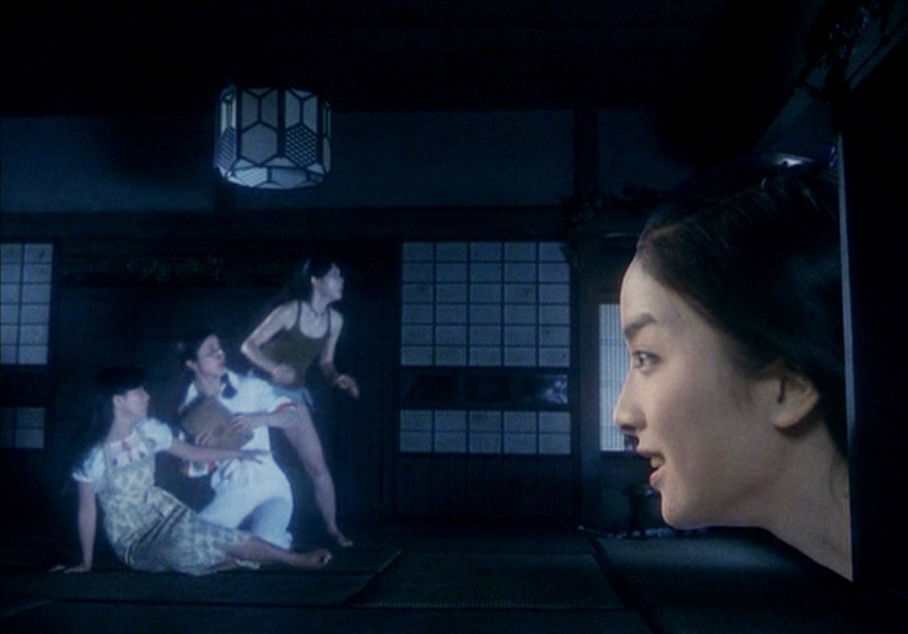
Although the recent Criterion release has allowed Obayashi's surreal exploration of teenage lift to gain new life, it still remains largely unknown by most. Outrageous, twisted, whacky... how to describe Houuuuuuse is virtually impossible, it simply must be seen to be believed. It may not be the Halloween film to keep you up at night with the lights on, but with a group of friends and some drinks you'll be sure to have a terrific night.
8. The Vanishing
(Spoorloos)
George Sluizer
1988

To call George Sluizer's 1988 European thriller a horror film may seem like a bit of a reach, but I'm indulging for a reason. It follows a mans obsessive three year search to discover the fate of his girlfriend who disappeared from a parking lot in the middle of the day. Her abductor is no ordinary psycho, a mild mannered family man and professor,
The Vanishing is a slow, but engaging psychological thriller that does away with genre conventions to pose questions about the human condition; Does truth mean closure? And at what cost? Do we all harbor darker thoughts? However it is the films finale that lands it firmly on this list. To give away anything would be an injustice. For me, it is easily one of the most upsetting and unforgettable of images committed to celluloid.
9. The Prophecy
Gregory Widen
1995

Big in scale, but short on budget Widen's tale of Angels, tortured 'priest detectives' and all out heavenly war is the stuff of total nonsense, but also the perfect Halloween treat. Christopher Walken delivers in spades as the angel Gabriel, perched on roof tops and sounding his trumpet (literally) to produce some giggles and Viggo Mortensen's appearance as Lucifer is all to brief but stays in the mind long after, for all the right reasons. It's not short on atmosphere either, with a tremendous sense of background scale,
Prophecy earns it's cult following.
10. INLAND EMPIRE
David Lynch
2006
For many, Lynch's most recent feature is one of the most impenetrable movies ever made. A three hour long odyssey of surreal insanity; queue talking rabbits, creepy neighbours, Polish sex workers and of course the Locomotion. Starring Laura Dern, in one of this decades great performances, she is an actress who has just been cast as the star of a new remake of a cursed Polish film, or has she? Maybe she is just the product of an imagination of a girl who is hypnotized into believing she is someone else making a movie about herself...(?) You can understand the frustration of many. But for all it's twists, Lynch underscores his film with moments of absolute horror. Virtually indescribable, Lynch has an understanding of the individual's subconscious and peeling back the layers, he discovers the most disturbing of images.
---------------------------------------------------------------------------------------------------------------------------
So there you have it, a briefly compiled list of some alternate titles to get you into the Halloween spirit. Have a good night folk, and I'll leave you with this to get your movie themed costumes rolling: