Tuesday, 15 January 2013

[Review] Les Misérables

Les Misérables (2012)

Director - Tom Hooper
Country - UK, USA
Starring - Hugh Jackman, Russell Crowe, Anne Hathaway, Amanda Seyfried,  Eddie Redmayne
Running Time - 158 minutes

In 19th-century France, Jean Valjean, who for decades has been hunted by the ruthless policeman Javert after he breaks parole, agrees to care for factory worker Fantine's daughter, Cosette. The fateful decision changes their lives forever.


Finally released in the UK after critical and financial success overseas, Tom Hooper's follow up to his Oscar winning The Kings Speech has picked up majorly during the awards season (being nominated for eight Academy awards just last week.) It isn't hard to see why, but despite the hype marketing this film as a sensational cinematic event, I urge you; save your money to see the stage show and in the meantime download the soundtrack, because as it is, Les Misérables just isn't very good.

Written in 1862 Victor Hugo's novel is a series of complex, melodramatic narratives that examines the human condition amidst the backdrop of socially and politically agitated France, eventually culminating in the 1832 June Rebellion. It's largely regarded as one of the best books of the nineteen century and its characters rank amongst some of literature's favourite creations. The stageshow, which has been in production across the world for three decades now, boils the narrative down to a series of impassioned set pieces and emotionally charged ballads. Here in lies the problem with Les Misérables, this approach may work on stage, which has its own established coda in regards to structure, narrative and staging - one that is inherently aimed towards no-holds-bard spectacle. That isn't to say that the songs in Les Misérables aren't any good here, they are. In fact it’s a testament to their quality that it is so easy to become swept up in them despite, well, everything else...

Becausefilm is not bound by the same coda as the impressionistic element of the stage, especially not one that attempts to base itself in a realistically recreated nineteenth century, the narrative must be reworked in order to give the events and characters some actual depth. So little is the amount of respect Tom Hooper has for his audience however that he feels no other need than to deliver astring of set piece moments and one dimensional 'device' characters, and expect us to give them our hearts in return. The connections and conflicts between the central protagonists seem so contrived and coincidental because the film moves from one heart-wrenching emotional high point to the next without balancingthem against smaller, more human moments that would justify the intensity of the songs.  

Thereis no regard for subtlety or ambiguity, no room for capturing the complexities of the characters by visualizing their actions. Instead Hooper tells us how to feel and who to feel it for under the guise of 'passion.' Take the introduction of second act key figure Marius, played by Eddie Redmayne, who simply appears and latches himself to the grown-up Cosette, the film instantly aligns itself with him without giving us ample reason why. Similarly policeman Javert's adherence to the law defies that of logical and emotional contemplation, an explanation (a rather shallow one at that) is given but it is still undermined by the sheer scope of his refusal to acknowledge the events as they present themselves in front of him. The narrative's impact is totally squandered bythis insufficient character development and it makes it difficult to care abouttheir success or failure.

Much has been made of the decision to sing the songs live, allowing the actors to gauge the delivery based on the actions and reactions of those around them, making their performances simultaneously more personal and natural. Whilst not entirely original, it is technically impressive and the likes of Hugh Jackman, an experienced performer, capitalizes on the process to show case his expressive dynamism. Unfortunately this serves to highlight the limitations ofthe rest of the cast, especially the much less convincing Russell Crowe, who has received much criticism for his gruff attempt to bark his way through each number. Needless to say, they're right and he's terrible. An intensely physical and committed performance from Anne Hathaway, gives way to the film’s most exploitative sequence as she scales show-stopper 'I Dreamed a Dream' down to an intimately raw depiction of a broken woman. Hooper smugly revels only in her pain, and it becomes an uncomfortable scene to watch.

The problem that comes with this approach is that Hooper then anchors the camera tothe actors. If he's not intrusively probing them with unflattering close-ups, he presents us with a number of unsuited and frankly boring compositions that fail to excite by lacking any visual flair. An opportunity to explore the surroundings through editing or montage that would reinforce the connections between the characters, or to foreground the contextual social elements thereby giving events and dramatic realizations any sense of weight, is totally lost, leaving the film totally limp. Hooper seems all to aware of this as he attempts to inject energy through unmotivated camera movements and misconceived expressionist angles, illustrating absolutely no understanding of the cinematic rhythm or space. Les Misérables is a film completely lacking any synchronicity.

This becomes indicative of the films many aesthetic and thematic inconsistencies. Sweeping establishing shots have no frame of reference and therefore no relevance. The blockade battle sequences are so poorly staged they have more incommon with a second rate amateur re-enactment from your local historical society. Hooper has neither the confidence to commit entirely to the prominent realistic style that blankets the films dreary proceedings, nor the desire to build upon the more traditional ensemble piece it utilizes to make light ofsome of the films darker elements i.e. working class discontent and prostitution. It fails to convince on any intellectual level. One can summarize the extent of this misconception by raising one probing question; for a film that claims to represent social injustice towards the working class, why arethe poor depicted as physically and emotionally repulsive?  

Les Misérables is a simplistic and manipulative film that reduces complexintertwining narratives and historical social melodrama to a lifeless backdropof self-satisfied, emotionally exploitative set pieces. Each character isreduced to a single function vessel of hollow passion; their development is so stilted, their actions so unjustified that they possess no relatable human qualities whatsoever. Their sole purpose is to con the audience into feeling. These elements may be forgivable on the stage, which has a degree of impressionistic limitations that would serve the nature of spectacle, but this is not the caseon film. Especially not this film, Hooper's direction is completely inept, brimming with such visual and structural incompetence that the film descendsinto the abstract. It has no regard for subtlety, or interest in ambiguity and therefore has no respect for its characters or audience. Despite being the central theme, deliverance only arrives when it bestows onto us an ending. It is then that we are free to leave the cinema and bask in the unceremonious complexities of the mundane.


1/5

Wednesday, 2 January 2013

The Year In Review [2012]


What a better way to enter 2013 than a retrospective of the year just past. Over the course of 2012 I managed to make it to the cinema around 50 times, and while the year took a while to give us anything really substantial, it ended a year on par with its predecessors, perhaps even better within its five top films, all of which I believe are certified classics.

Undoubtedly it is the superheroes that have had the biggest, at least in financial terms, success this year. With Spidey, Bats and that whole Marvel lot all bringing in the dollars across the summer. Yet none of them will find a place on my list for the year’s best. Away from the convoluted mess of The Dark Knight Rises and plodding simple-mindedness The Avengers (Assemble) the genre did bring us one of the best surprises this year in Chronicle. Josh Tanks allegory of teenage angst proves to be the most human and straight up entertaining addition to the world of super heroes since Spiderman 2.  

Disappointments came in from the indie scene too with Beasts of the Southern Wild, which bewitched critics in Cannes with its rustic charms and babbling miniature protagonist but proved to be a forced and rather hollow look at a naturalist lifestyle. The biggest offender however came right at the end in Ang Lee's Life of Pi, mainstream audiences may be dazzled by the trippy aesthetics of pop-spiritualist ideals attached to some solid survival adventure film making but I found it to be a tacky, hollow and over-composed waste of time.

On a positive note this year was a great triumph for British cinema, two of which feature on my list of the year’s best. The return of Hammer horror is bound to warm the hearts of many, even if The Women in Black was a middling horror film, but its success at the box office means they're likely to get another shot. Speaking of success the wonderful return of James Bond in Sam Mendes' Skyfall just recently passed the $1 billion mark worldwide.

Still had if you've found this year to be not so stimulating there is always the 'stay at home' option, so while I'm on the subject I'd like to name The Masters of Cinema release of The Passion of Joan of Arc my Blu Ray of the year. They have been continuously fantastic as the year has gone on and this beautiful release is stacked with content and alternate version, a complete must for any serious film fans.

Okay, I've said my piece, let's move onto the list.

[Note] - At the time of writing, this list may be subjected to change, there are a number of omissions that I would like to have seen before making this list, but alas it wasn't to be. 

The Top 10 films of 2012 


10. The Grey - (USA, Dir. Joe Carnahan) 

A victim of marketing and reputation, Carnahan's film about a group of plane crash survivors, led by Liam Neeson, attempting to make their way through the Alaskan woodlands, as they are pursued by the elements and a pack of ravenous wolves is less Taken With Wolves as the trailer would suggest, and more an existentialist drama about coming to terms with death that has more in common with early day Herzog than anything else. The numerous archetype characters become symbolic of the individual elements in one’s own existence, gradually stripped until we are left with nothing but the essence of life itself. Neeson is a terrific as the exhausted Ottway, a disillusioned man with nothing but life to live for, given the recent death of Neeson’s own wife in a skiing accident, this performance looks to be something of a personal catharsis by the way in which he carries himself. It isn't without its faults, most notably the dodgy CGI wolves that push the boundaries of believability into the goofy. But the gorgeous visuals and no-holds-barred approach to film making makes The Grey something of a unique, massively engaging and surprisingly effective genre piece.    


9. Sightseers - (UK, Dir. Ben Wheatley) 

Ben Wheatley's third feature allows his trademark black humour to take centre stage in his caravan based satire of middle class discontent. We follow Tina, Chris and kidnapped dog Poppy on a self-proclaimed erotic odyssey around some of England's most, well, English tourist attractions. I stated in my review, Wheatley taps into a primal urge that runs through the core of Britain; here it manifests itself as an extension of alpha male domination unleashed by the lucid beauty of the mud-stained countryside. It is the surprisingly human nature of the film's main relationship that places it on the list of the year’s best. Tina and Chris (played and written by Alice Lowe and Steve Oram) are built upon the combination of the lovers-on-the-run cinematic ideal and childhood memories of the family holidays, the grizzly killings and dark humour are played against sensual passion and even sombre tenderness.   


8. Room 237 - (USA, Dir. Rodney Ascher)
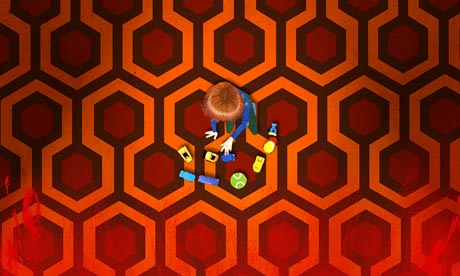
A film Mark Kermode, rather accurately describes as 'Or How I Learned to Stop Worrying and Love Film Studies.' Ascher's documentary works as part introduction, exploration and criticism of film theory presented as a stylish, self-aware mystery that could have a limitless number of answers or none at all. That mystery of course is Stanley Kubrick's The Shining. Reigning in the world’s most leading experts in Shining-analysis, there is enough conviction in the delivery to make even the most ridiculous theories have a degree of plausibility, yet the film isn't short on chills and laughs. Through all this there is a sense of what we may find in The Shining, in any film, in anything is just a reflection of our own beliefs and interests, therefore elevating this meta-documentary from entertaining bar fodder to fascinating dissection of a critics role. 


7. Tabu - (Portugal, Dir. Miguel Gomes)
Cinema becomes a memory, and memory becomes cinema in Miquel Gomes terrific gem. Opening in a slow but measured depiction of modern Portugal, we follow a middle-aged woman called Pilar encased in her loneliness. She deflects her own problems with interest in her elderly neighbor, Aurora who is in early stages of dementia. Yet when the old woman dies, her past life on the plains of Africa is revealed and we are taken on a richly cinematic adventure. The second half of the film takes place as a film between the silent and the sound era. Shot beautifully on 16mm stock and dryly narrated by Aurora's aged lover, it becomes an exploration of the past passions and cultural boundaries of a bygone era. Playful, erotic and mysterious this is film to treasure and behold. 


6. Berberian Sound Studio - (UK, Dir. Peter Strickland) 

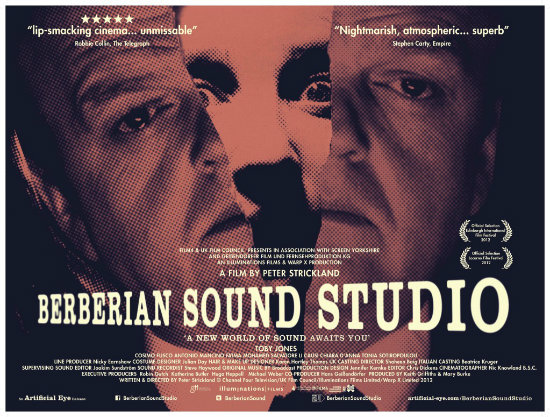
Wearing its influences on its sleeve Berberian Sound Studio is a cold and darkly funny deconstruction of horror film making as well as a send up to one of its most culturally significant sub-genres. Toby Jones plays a reclusive, droopy sound technician called in to work on the Gallio-esque The Equestrian Vortex. Trapped within multiple layers of Kafka based bureaucracy and the exploitative nature of the films narrative begins to expand into the studio itself, Jones shrinks into his work, becoming increasingly obsessed. There is a disorientating lack of time in this film as Jones loses himself into the Vortex. Strickland offers up a criticism of the film maker as well as a warning to the audience about the dangers of exposing one’s self to the disturbing nature of horror films and the increasingly machine driven art world. 


5. Cosmopolis - (USA, Dir. David Cronenberg)
David Cronenberg's returns to his psycho-sexual, psycho-technological routes with his adaption of Don DeLillo’s novel. In what might be this year's most important film Robert Pattinson plays (wonderfully) an elusive billionaire traveling through the city in his soundproof limo in order to get a haircut. Along the way he will meet various people and dissect the increasingly technological economy and by extension, existence. It doesn't sound as fascinating or engaging as it is. Howard Shore's astonishingly chilly techno soundtrack underscores the film's journey around the computerized labyrinth city, whilst the expansive limo becomes a spatial anti-reality inhabited by the cast. Fascinating, cool and hypnotic Cosmopolis is a difficult but powerful masterpiece.  


4. Holy Motors - (France, Dir. Leos Carax)

The other 'limo based epic' of 2012, this time it is the French 'son of film' Leos Carax who is behind the wheel the destination of course, is the cinema. Dennis Lavant gives the greatest, most versatile performance of the year as Oscar, a man being driven through Paris to several different... appointments. Just what is Holy Motors is something I'm still working on myself, a running commentary on the state of cinema? An ode to the art of acting? An evaluation of the ever increasing online based society? All of the above? I don't really know if it matters, the true importance here is that Carax manages to craft an insanity based odyssey that is completely unique, darkly funny and infinitely puzzling.  


3. Amour - (France, Austria, Dir. Michael Haneke)
Haneke's films have always looked to undermine his audience and even his characters with regards to ones expectations; apocalypse's come about without cataclysm, mysteries are often left unexplained and suspense refuses catharsis. Yet this is not the case with Amour, which is a love story in the truest and most difficult sense. It follows his patented bourgeoisie couple, Anne and Georges, in retirement. They live in a spacious flat and spend their days going to concerts and being visited by their daughter. Only when Anne suffers a stroke is their relationship tested to the extreme. Some have pointed to Amour as evidence to a compassionate side to Haneke's icy professionalism that frequently results in an acute detachment that many find difficult to endure. It isn't compassion I see within here, but insecurity. Haneke treats death with the same calculated gaze that he would the glamorization of violence or social responsibility, but he flinches. He treats his characters with an uncertain dignity at an age when dignity leaves us, refusing to exploit the deterioration of Anne's condition in order to squeeze sympathy from his audience. The climax is a moment of devastating desperation; it is the unavoidable price we pay to love.   


2. The Turin Horse - (Hungary, Dir. Bela Tarr)
The final film of Hungarian auteur Bela Tarr, one could easily dismiss it as not for everyone (a true but shallow claim that I've come across in a number of reviews) there is certainly something for everyone here.  Opening with a quote about Nietzsche's defence of a horse [in Turin] being whipped by its owner, the tone is set for Tarr's apocalyptic meditation on suffering. Shot in staggering black and white, it is composed of a mere 30 takes (it is over 140 minutes long) charting the existence of a father and daughter on their farm as fierce winds surround the house. If not the end of the world, it is the end of humanity through gradual erosion of our human nature. A staggering seven minute monologue that the film is centred on opens up Tarr's world for the audience only for a brief moment before it is closed down. Endurance and survival they are not the same as life in Tarr's bleak epic, but if the end is coming I'd imagine that won’t matter. After all, what are we but a light fading slowly out of existence into the overcoming darkness? 


1. The Master - (USA, Dir. Paul Thomas Anderson)
Paul Thomas Anderson's The Master is a landmark film. Complex, unyielding and distinct it offers up a view of Post-War depiction of a damaged American and those who would exploit it. As redundant a comment it is to make, The Master is a modern companion to Orson Welle's Citizen Kane, in both subject and quality. Boasting three astonishing performances from it follows the relationship between World War II veteran Freddie Quell and Lancaster Dodd (based on Scientology founder L. Ron. Hubbard,) as the latter tries to demonstrate his self-help 'processing' to fix the damaged and potentially dangerous Quell. Anderson challenges us on every cinematic level, from the off kilter score by Jonny Greenwood, to his refusal to offer up the expansive landscape shots we expect from the 65mm format he shot on. His lens is a looking glass through the past where he discovers a repeating pattern woven into human nature throughout time. The Master is an unmatched, ever fascinating piece of cinema that will be studied and evaluated over the course the next hundreds of years, from one of the most enigmatic and talented masters.    

So that's it for my top 10 films of 2012, I hope you enjoyed the list and here's to hoping we have another fantastic year ahead.


Monday, 31 December 2012

2012: My Year in Film (Part 2)


Welcome back for the second part of my own little piece of self-reflection here. This is my list of the top 25 films I saw for the first time in 2012:

25. Les Diaboliques - (1955, Dir. Henri-Georges Clouzot)
A fantastic deconstruction of thriller conventions, before a lot of them even came to exist. It is not the emergence of a body that sets the wheels in motion, but the disappearance of one. The determined and intelligent detective is an uncomfortable figure of pressure. Then of course, there is the climax, an ultimate image of pure horror. Les Diaboliques is sheer brilliance.   

24. The Incredible Shrinking Man - (1957, Dir. Jack Arnold) 
It isn't until the final moments of Arnold's low-key Science Fiction film based on the novel by I am Legend author Richard Matheson that it emerges as a distinct genre classic. After being hit by a toxic gas (back in the time when it was something as simple as 'Science!') Scott Carey finds himself shrinking until he is only a few inches high. Queue the iconic and exhilarating fight with a house hold spider with genuinely good effects! But it is the surprisingly metaphysical ending, where a now microscopic Carey imagines himself as part of an infinite number of universal loops that will leave you questioning the fragility of our placement here on earth.

23. Naked - (1993, Dir. Mike Leigh) 
David Thewlis gives an amazingly fierce performance as intelligent misanthropic drifter Jonny, in Mike Leigh's nihilistic odyssey. A dark look at the human race through the eyes of someone so brilliantly beyond help from anyone who tries to reach out to him. Leigh's script is full of black comedy and social satire, including the famous doomsday rant that might just be my favourite speech of the year, you can watch it here.

22. The Man With a Movie Camera - (1929, Dir. Dziga Vertov)
Off the back of this years Sight and Sound poll I looked up Vertov's experimental montage piece. A truly landmark testament to civilization. An explosion of images and editing, it becomes a symphony of light, sound and texture. Our camera man is separated from this existence, he cannot experience it's joys but it is his duty to capture the wonders of it. What keeps this film from being a mere museum piece, such as The Battleship Potemkin, is the cheeky tone and incredible, frequently dangerous stunts. 

21.Anatomy of a Murder - (1959, Dir. Otto Preminger)
Such a fascinating depiction of a murder trial. This isn't merely a case of getting the good guy off, in fact we are never quite sure of Manion's true composure at the time of the shooting. It isn't the point, this is a study of murder as a legal matter. Jimmy Stewart's small town retired attorney facing off against state lawyers is projected by a sizzling script with an abrupt frankness and sharp humor that remains completely riveting for it's entire 160 minute running time.   

20.  The Sacrifice - (1986, Dir. Andrei Tarkovsky) 
Tarkovsky's final film is a plea to mankind. For humanity to survive one must be prepared to sacrifice. At the outbreak of World War Three Alexander promises to God that he will give everything; his family, his house and even his sanity in order for the world to be spared. Shot on Faro Island, the film is an homage to Bergman, Tarkovsky even used Nykvist, Bergman's cinematographer, to shoot the film full of natural light and medium tones. The film is wrought with direct urgency that comes come Tarkovsky being just months from death. The climax is the most tragically beautiful image of a powerless man in the face of a great unquestionable force. 

19. High and Low - (1963, Dir. Akira Kurosawa) 
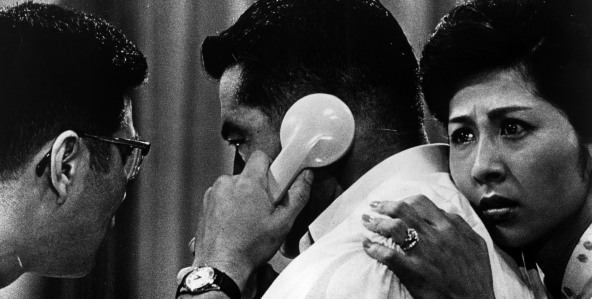
My favourite from the famed Japanese director. The 'high' and 'low' has a number of connotations here; the social unrest between the rich and the poor, the spatial distance between kidnapper and Mifone's astonishing Kingo Gondo, it is even a crude reference to the drug idled underbelly to which the film moves towards in the final act. What starts as a terrifically tense Hitchcockian domestic thriller about a kidnapping gives way to a thorough and extended police procedural drama with reactionary commentary towards the emerging social commentary, few films make tire pattern analysis this entertaining.

18. There Was A Father - (1942, Dir. Yasijuro Ozu) 
A delicate film about a father's sacrifice to ensure the future of his son is one of Ozu's quietest, and best dramas. Regular  Chishu Ryu is wonderful as the tender and caring father, that distances himself from his boy after a tragic accident at the school he works. This film is simple, honest and elegant perhaps more so than most of Ozu's work. It is because of its release date, that There Was a Father becomes distinctly political, I doubt it was much to Ozu's intent but it looks to place the film in history. 

17. In The Mood for Love - (2000, Dir. Wong Kar-Wai) 
Few other directors carve such intense sensuality from the human form as Hong Kong auteur Wong Kar-Wai and In The Mood for Love is a film made of candle lit delicacy. Love unsoiled by love. The two neighbours, who bond over their partners infidelity gradually develop a captured passion for each other. Every shot, movement and hair is composed to such a measured perfection. It toys with us, excites us and eventually burns through us. When it's over, we have to turn to any hole we can find, whisper our emotions and then cover it up.  

16. Shame - (1968, Dir. Ingmar Bergman)
If Bergman had anything that resembled an action film, this would be it, even including a tense getaway as the  couple (Sydow and Ullman) drive through an ongoing invisible battle. It isn't a look at what war turns us into that makes Shame one of the Swedish master's greatest films, it is the effect it has on a couple's relationship. Both actors give some of their finest work, but it is Ullman who delivers one of the most devastating lines in cinema history and the final, apocalyptic image shakes you down to your very core. 

15. The Apartment - (1960, Dir. Billy Wilder) 
Along with Psycho, Billy Wilder's morally grey comedy about a man who lends his apartment out to his bosses so they can conduct their numerous affairs represents the breakdown of the Hayes code. Jack Lemon's C.C. Baxter represents the increasing deterioration of American ideals. An every man, having to exploit the decrepit nature of those above in order to succeed. The beautiful, desirable Miss Kubelik played by Shirley MacLaine is another victim of such nature, one who has been beaten one too many times and attempts a harrowing suicide. Wilder see's too it he gets the laughs, the chemistry between Lemon and MacLaine is terrific, and his script is, as usual directly acute. But rarely does mainstream American entertainment come with such a grey scale moral compass. 

14. Through a Glass Darkly - (1961, Dir. Ingmar Bergman)
The first in Bergman's faith trilogy is one of his most harrowing films, he looks at the strain of mental illness on a family. Bergman fractures himself and his relationships between the four characters. The Spider-God's presence looms over the family, driving them to destruction. It is one of the most tangible and devastating images in Bergman's complete cannon. Yet there is a singular bead of hope in the film's final line 'Father spoke to me.'   

13. Barry Lyndon - (1975, Dir. Stanley Kubrick)
Kubrick's detached coolness that dominated (most) of his films in full force here, literally to the point where the narrator tells us the events before they happen. Ebert raises an interesting point; this can work as a companion piece to 2001: A Space Odyssey as a piece about survival and evolution. One on a mass scale, one a selfish and essentially minor one. Although here I don't find any ethereal alien gods guiding Barry. Instead there is a sense that he makes his own fate, even if he is unaware of it. Kubrick utilizes pretty much every tool at his disposal to tell his story of insignificance. Deep and shallow focus, trade mark tracking shots, candle light, wide angle landscapes, zoom outs and ins, close ups, repeated classical music motifs and of course, the detached narrator. It's a picturesque feast. 


12. Pierrot le Fou - (1965, Dir. Jean-Luc Goddard)
Goddard's explosion of pop art and colour has been my favourite journey into the French New Wave and one of the most gloriously entertaining films I've had this year. A married man runs off with his babysitter in a (often violently) clashing satire on society. It's the cinematic equivalent of throwing everything the wall and seeing what sticks. The result is, well, most of it.

11. Two-Lane Blacktop - (1971, Dir. Monte Hellman) 

This was probably the purest, most profoundly cinematic road movie of them all. Not only is one of the most interesting preservation of 70s, it's the definitive counter culture piece. The sparse use of dialogue is made all the more effective by how fantastic the subtle interactions are between the cast. At once a love letter to the connection between man and car, a dissection of isolation and an examination of the pro-masculine, American obsession of drag racing.


10. Pale Flower - (1964, Dir.  Masahiro Shinoda)

A more mature entry in the Yakuza genre in response to Suzuki's surreal madness. A sultry look at the life and path of a Yakuza from a man on the cusp of middle aged. Pale Flower is a darker jewel of Japanese New Wave, gorgeously shot and featuring a dryly sensual score by Toru Takemitsu. Ryô Ikebe's performance is one of weight and experience, but it is in the darkly beautiful face of  youth belonging Mariko Kaga that his disillusionment is transfixed leading him back into the labyrinth that is the criminal underworld. 


9. Kiss Me Deadly - (1955, Dir. Robert Aldrich)

The final noir, Aldrich pushes every element of the genre towards destruction. Our hero is a primal brute of pure chauvinism, our femme fetale is broken and spread across five women, who's combined efforts amount to nothing. Then of course it is a case of the secret at the bottom of the box, the great whatzit. It is of course, nothing, nothing but destruction. A blinding burning hiss of white light that burns through the frame, consuming all in the cinematic space itself. Kiss Me Deadly drives the short lived genre, in its purest form, into the nuclear pit where it collides with other forms and cultures emerging a self-aware hybrid, led by that unearthly scorching hiss.   


8. The Passion of Joan of Arc - (1928, Dir. Carl Dreyer)

A film of pure visual emotion. Falconetti's performance is truly one of the greatest in the whole medium. Every element is driven by expression, by unsuppressed emotion. The sparse sets reduce everything to its most human and wholesome. The jurors loom over Joan, physically dwarfing her. Just looking at Falconetti's face is a draining and devastating experience, her eyes become a window, unflinchingly looking deep into the human soul. You literally see a woman bare her all in the face of a manipulative and cruel system. The  newly released Masters of Cinema Blu Ray, a contender for best Blu Ray of the year, offers it as it should be seen, in complete silence. 


7. La Jetee - (1962, Dir. Chris Marker)

Poet, philosopher and artist Chris Marker ponders the relationship between images, memory and time, in this radical science fiction film. It follows a survivor of a devastating world being thrust back and forth through time in order to ensure the survival of the human race. Through his journey he finds immortality, it is located within a museum filled with stuffed animals, a stripped of their essence. Composed almost entirely of still photographs, it punctuated by a single awakening moment of film. That is the moment of pure, unmatched clarity, the returned gaze of the person you love.  


6. The Leopard - (1963, Dir. Luchino Visconti)

The ballroom dance that the film's final act is structured on is not only a triumph of art direction, set design and cinematography, it is the swan song of two era. Burt Lancaster's (who gives one of the finest performances ever) Prince Salina is part of a class long gone, a leopard replaced by a hyena, but the film is also part of a bygone era. Sculpted so extravagantly and paced with complete grace, it represents a by gone era of film makers and making. Seldom does film making reach such a grandiose scale. 


5. Sunrise: A Song of Two Humans (1927, Dir. F W Murnau)

If L'Atalante was a haunting look at loves spontaneity, Murnau's Sunrise is a fever dream. A virtually uncompromising explosion of love, coming from the darkest place. Our young couple impassioned with each other, blaze through a city just as impassioned with their love. For just a few hours, we give our complete selves to these nameless lovers and every problem in the world melts away with them. 85 years old, it is graciously immortalized by it's complete earnestness.


4. Sansho The Bailiff (1954, Dir. Keji Mizoguchi)

The delicacy of human life is tested to the extreme in Mizoguchi's masterpiece. Although firmly Eastern in its setting and style, it's story is in line with Greek tragedy. The story of a family torn apart by evil is one of the most human and eye opening films apart. Some truly devastating moments, when the family is separated it is marked by unsympathetic music, highlighting the hopelessness. Even still Anju's sacrifice might just be the most perfectly composed moment in this list. The final empathetic image has a degree of hope, the human spirit remains tested but in tact in Mizoguchi's brutal world. 


3. Bigger than Life - (1956, Dir. Nicholas Ray)

Nicholas Ray's operatic masterpiece breaks down and reverses many of the nuclear family ideals, James Mason plays Ed Avery, a middle class school teacher who is given cortisone to suppress his the development of a fatal illness. Treatment becomes dependency, and it is not long before dependency becomes addiction, turning Avery into an egotistical maniac and something much more disturbing. Brilliantly shot on CinemaScope, Ray's impassioned domestic monster movie is perhaps the best film in the directors vibrant, passionate canon. 


2. Harakiri - (1962, Dir. Masaki Kobayashi)

Just as Kiss Me Deadly is brought a nuclear destruction to the noir genre, Harakiri is the anti-samurai film tinged with apocalyptic hatred. Kobayashi see's no glory or honor, only death here. A man with nothing left to lose tries desperately to expose a corrupt and evil system. Long corridors represent a Kafka-labyrinth of bureaucracy. The bold chiaroscuro cinematography crash through each frame with devastating clarity, the film opens with a shot of empty armor, a monument to the facade of this empty system. As his last action, Hanshiro Tsugumo tears it down. Yet as, Harakiri ends with the armor rebuilt, the disruption off record and system intact. But its effect lingers long after. Brutally fierce, cruel and emotionally draining. It is a masterpiece of blood, sword and snow.


1. The Decalogue - (1988-89, Dir. Krzysztof  Kieslowski


Kiewslowski's monumental cinematic movement made up of ten short films based on the Catholic interpretations of the ten commandments is, quite possibly the art form's greatest achievement. While some entries are flawed in their own right, as whole the series transcends cinema, even art. Although religious in subject, it is not in nature. Kieslowski searches for the spiritual and finds only suggestions. Each entry is shot by a different cinematographer, each character is therefore allowed their own visual perspective of the world,  one such example would be the intense grime in entry V (which would become A Short Film About Killing.) Yet they are linked through music and visual motifs such as milk or the ever present 'watcher.' Kieslowski creates a micro-universe and fills it with everything that we, as a race have. Thus, The Decalogue becomes a work of profound humanism, intimately capturing every moment in the fabric of our existence. From prodigious actions of some to the minute connections between strangers, through the apartment block the series is set we experience immense pain and disgust to unwavering love and miraculous joy. It ends with the single most human image ever committed to film, the image of laughter.

It was, undoubtedly, the best film(s) I had the pleasure of viewing this year and I'll be damned if it is topped for some time. 


[Honorable Mentions: Youth of the Beast, Tokyo Drifter, The Naked Kiss, Stalker, Belle et le Bete, Repulsion, Wings of Desire, Robinson Cruesoe on Mars, No End, Camera Buff, Cries and Whispers, Sans Soliel, If.., Lost Weekend, Walkabout, The Ballad of Narayama, Modern Times, The Royal Tenenbaums, Close-Up, Amarcord, Red Dessert, The Discreet Charm of the Bourgeoisie]  

So that does it, 2012 has been one continuous eye opening cinematic journey for me, one that I cannot wait to continue in the year to come. Happy New Year everyone! 

Sunday, 30 December 2012

2012: My Year in Film (Part 1)


So the year draws to a close, and in a few days I will be posting up my list of 2012's best films (once I've caught a few late entrants.)  In the mean time, here is a list of the 50 best films that I've watched this year

Through the likes of Twitter, Mubi, this years Sight and Sound poll and of course the work of those at Criterion and The Masters of Cinema this year has served as an introduction to a lot of cinema for me. Through the (roughly) 300 films I've watched my taste has broadened and developed, proving a bit of a strain to those around me, a lot on this list I have enjoyed alone. 

[I have tried to make this list as varied as possible, to easily could it have been filled with the likes of Bergman or Kieslowski who I watched around 20 films of each. As a result, there are a few well deserving titles that have been left off, but I shall do an honorable mentions list at the end.]  

50. Crumb - (1994, Dir. Terry Zwigoff)  
An interesting look at an Artists reflection and the nature of the 70s underground movement. As well as a disturbing look at a twisted product of the Nuclear era. Zwigoff's tight framing and unflinching eye creates an uncomfortable intimate portrayal of an America family. 

49.  Kuroneko - (1968, Dir. Kaneto Shindo)
A darkly poetic little horror fable from Japan about a man who returns from war a hero only to be tasked with ridding the woods of two demons who pray on Samurai. The etherally spooky first half gives away to a sombre Shakespearean drama about the nature of love and revenge. Beautifully shot and wonderfully staged. 

48. Vampyr - (1931, Dir. Carl Dreyer)
I managed to see the wonderful restored release played with a live soundtrack which enhances Dreyer's hazy visuals and cinematic tricks. A unique and eerie dip into obsession and the occult. 

47. Branded to Kill - (1967, Dir. Seijun Suzuki)
My first trip into Japanese New Wave has remained one my favourite. Suzuki has flare and coolness in abundance as we follow Goro Hanada, the hamster-cheeked rice fetishistic hit-man as he climbs the ranks of hired contract killers. Be prepared for theatrical insanity and lots and lots of butterflies.  

46. Will Success Spoil Rock Hunter? - (1957, Dir. Frank Tashlin) 
Wonderfully playful study of public image and media obsessions. Tony Randall, channeling Jack Lemon, simply steals the show as the titular Rock, an every-man working at an advertising agency after a simple life that becomes entangled with the Monroe-esque Rita Marlowe (Jayne Mansfield) when he pursues to market a product. Colourful and light-hearted, but direct in its honesty.  

45. House - (1977, Dir.  Nobuhiko Obayashi)
If film is the real reality, then I still have no clue as to what Obayashi's masterpiece is. Part surrealist horror film, part pop music video. A film so deliriously insane it boarders on tiresome, but perhaps no other film on this list can wear the slogan of 'it must be seen to be believed' so proudly.  

44. Lorna's Silence - (2008, Dir. Jean-Pierre and Luc Dardenne)
A deconstruction of marriage built without love and study on 'the guilt of women.' Dardenne's characters are plagued by pain, mental and physical. But it is a real pain, not of the cinematic standard. 

43. Lola Montes - (1955, Dir. Max Ophüls)
An explicit and elegant look at celebrity and our desire, or even societal need for it. We watch a young women relive her various scandals and experiences throughout Europe as part of a circus attraction. Shot on beautiful CinemaScope it is enamored with vibrant Technicolour, Ophüls treats his characters with one thing that alludes most directors these days; respect. 


42. Shotgun Stories - (2008, Dir. Jeff Nichols)
Take Shelter was my favourite film from last year, and Shotgun Stories works notably sewed the seeds for Nichols' masterpiece. A blue-collar drama imposed onto a classic Southern feud between two families. There is a biblical quality to Nichol's narrative as sins and burdens are passed through the generations with tragic consequences. Shannon is remarkable as ever, as is his supporting cast. But the true star is the industrially earthy Arkansas in which the film is based.

41.  Laura - (1944, Dir. Otto Preminger)
When a young woman is murdered, a police detective is called in to interview the people closest to her in order to piece together the events that led to her murder and help capture the killer. Gradually he finds himself becoming obsessed with the dead girl himself. The noir genre is built upon chauvinism and Laura is centered upon the destruction of the intellectual in favor of the primal. Through clever dialogue and remarkable acting, it balances the B-movie nature of it's screenplay with first class style.  

40. The Red Shoes - (1948, Michael Powell and Emeric Pressburger) 
The life of the artist is one of dedication and sacrifice in the strive for perfection. And Moira Shearer's rising ballerina is a victim of choice, the love of her composer or her legacy as an artist? Jack Cardiff is justly renowned as the 'King of Technicolour' and the central dance sequence is his opus. Frantic, hallucinatory and utterly transfixing.  

39. Fiend Without a Face - (1958, Arthur Crabtree)
Much has been done in the name of knowledge throughout cinematic history. In Crabtree's Sci-fi/horror hybrid it is the knowledge itself that becomes the monster. Feeding on our memories and intellect, it becomes a murderous warning. Terrific sound design, creepy stop motion and a brilliant climax make this a classic genre piece. 

38. Late Spring - (1949, Yasujiro Ozu)
Throughout his career Ozu returned time and time again to one single theme; a fathers concern for his daughter to marry. The first in his 'Noriko trilogy' centered around the character played by Setsuko Hara, it  is a elegant and moving drama of love, sacrifice and duty in the confused world of Post-War Japan. It's final image is a moment of pure beauty and an encapsulated view of Ozu's career.  

37. Shock Corridor - (1963, Sam Fuller) 
Crass, exploitative and silly are three words one could level at Shock Corridor and they'd be absolutely correct. But it is also a daring, hot-blooded satire on the political and cultural America of the 1960s. Harsh black and white photography by Stanley Cortez and terrificly unsettled performances by Peter Breck and his concerned stripper girlfriend, Constance Towers ensures Fuller's thriller is at once hard to watch, and even harder to look from.    

36. The Driver - (1978, Dir. Walter Hill) 
Lovers of Refn are sure to enjoy Walter Hill's icily cool original. An intense game of cat and mouse between Bruce Dern's Detective and Ryan O'Neal's Driver as study of professionalism in the extreme, these two figures exist for each other alone. Hill's homage to Melville's Le Samurai features some of cinemas best car chases and style in excess. 

35. The Island of Lost Souls - (1932, Dir. Erle C. Kenton) 
Based on the novel by H.G. Wells, this is the original and best version of the twisted Moreau and his beast men. Surprisingly ahead of it's time in regards to its lighting and set design, the real star is Laughton's giddy and flamboyant Moreau that straddles the line between camp and creep.

34. Double Indemnity - (1944, Dir. Billy Wilder)
Billy Wilder's canonical film noir perfectly presents the decaying social atmosphere of Los Angeles. Fred MacMurry is completely believable as the insurance salesman roped into murder with Barbara Stanwyck playing one of the best femme fatales. 

33. A Night to Remember - (1958, Dir. Roy Ward Baker)
Presenting the sinking of the Titanic almost in complete real time, A Night to Remember is laced with an upper-lip-Britishness that presents itself as level headed bravery. Kenneth Moore's earnest Second officer Herbert Lightoller becomes a template for British attitude in the post-war nature. However it is through the film's aversion to melodrama, in favor of detail and subtle motifs that heighten the emotional impact.

32.  L'Atalante - (1934, Dir. Jean Vigo)
A film of poetic earthiness. Following two newly weds on their life aboard barge L'Atalante. Jean Vigo was only 29 when he died, but this film assured his legacy. The lovers fall apart, as we have seen time and time again, but their longing for each other is illustrated through Vigo's haunting visual spontanuity, and the film remains one of the purest love stories.  

31. Tyrannosaur - (2011, Dir. Paddy Constantine) 
A ferocious film about damaged people coping through the relationship they form with one another. Not the nihilistic kitchen-sink drama I expected, this is film blankets the darker elements of the middle class too. Peter Mullan is terrific, but it is the broken Olivia Colman who will remain in your head for days after.

30. 3 Women - (1977, Dir. Robert Altman) 
A sensual cinematic dream of identity and women. Led by the three astonishing performances, the lanky Shelly Duvall, the lizard-like Sissy Spacek and the beautiful Janice Rule. They are a disjointed family brought together by loneliness. The deeply symbolic visuals and ethereal music embody a dream of American idiosyncrasy that will stay with you for some time.

29. The Docks of New York - (1927, Dir. Josef von Sternberg) 
I wrote a piece on the character of New York in this, one of the last silent giants which you can read here. Although to reduce Docks to a single element would be to do it a disservice. A pragmatic romance, Sternberg doesn't judge but he knows. In many regards this is a blue collar Gatsby, a story of mistakes and blind, foolish faith in the city that never sleeps and stops for no-one.

28. Videodrome - (1983, Dir. David Cronenberg) 
Cronenberg has recently returned to his fascination of the interplays between our psyche, the technological and the sexual with the wonderful Cosmopolis. In some ways Videodrome is his most prophetic and visceral movie as James Woods becomes psychologically then physically warped by his obsession with the Videodrome tapes. Long live the new flesh!

27. Hour of the Wolf - (1968, Dir. Ingmar Bergman)
Bergman gives himself to his own anxieties as an artist and as a lover in his Gothic horror film. The overt nature of the increasingly disturbingly surreal visuals and oppressive atmosphere make this feel like something of an homage to the Swedish master. Max von Sydow delivers one of his most tortured performances as a man hunted by his own self esteem and Liv Ullman his dedicated wife.

26. Solaris - (1972, Dir. Andrei Tarkovsky)
Tarkovsky considered this a response to the Kubrick's titanic 2001: A Space Odyssey, which he considered to be a cold exploration of existence. This is undoubtedly the more human of the two, although in essence a science fiction story, it is also a Greek tragedy, as a man fails to protect the women he loves, he is punished time and time again. Few artists can create such an atmosphere as Tarkovsky. The strange sound effects and unnatural performances create a truly uncomfortable and unrelatable setting, yet one that delves deep into the very fiber of our being, moving through our own comprehension. An unforgettable masterpiece of philosophy and genre.


This concludes the first part of my year in cinema review. Tomorrow I will have a run down of the next 25 films on my list from this year. 

Monday, 24 December 2012

The Festive Take: Alternative Christmas Movies


With the Christmas season comes the Christmas movies, and if you're anything like me you've seen Elf more times than you care to imagine. So if you've had enough of the Muppets, Jimmy Stewart and well... Arnie, here is my list of some alternative Christmas films to fill you with the festive spirit.

1. Fanny and Alexander (1982)
Family, the adverts would have you believe, is one of the joys of the season. So what better way to engage with all those dear to you by settling silently in front of the TV to watch other people do Christmas? In that sense, Ingmar Bergman's nostalgia based study of childhood is the ultimate family film. It is not long before death, ghosts and tyrannical step fathers bring the mood down (this is Bergman after all) but the opening Christmas feast is a pure delight, exploding with a smorgasbord of food, colour and activity that will make you long for the days before Facebook stole Christmas. Above all else, Fanny and Alexander will remind you what the meaning of family really is.


2. Brazil (1985) 
Twisted satire from one of the Pythons now. The intro is pure madness. 'But Father Christmas can't come if we don't have a chimney,' inquires a young girl, only for paramilitary police to crash through the ceiling and abduct her father, in a sack no less, to be taken in for questioning. This is our welcome to Terry Gilliam's bureaucratically based dystopia. With dark comedy and H.G. Welles inspired dreamscape imagery, this is a unique Sci-fi with a festive twist, as Gilliam turns his keen surrealist eye at the ever-increasing commercial focus of Christmas. 

3.  The Night of the Hunter (1955)
Charles Laughton's masterpiece is a modern fairy-tale of good versus evil. Set in the Great Depression it follows two orphaned children, John and Pearl as they are pursued across Southern America by the terrifying and murderous 'Reverend' Harry Powell (played by the brilliant Robert Mitchum as one of the all time great villains.) Christmas is no where to found until guardian angel Lillian Gish steps in to defend them.  'It's a hard world for little things,' she states at the films end, and with it, we are reminded of who the magic of Christmas belongs to most of all, the children. 

4.  The Proposition (2005)

Christmas will have never seemed so far away in John Hillcoat's Australia-based Western. Still if you're fed up with the dreary British weather (A white Christmas looks far off at this point,) you can imagine yourself in the blistering heat of the Australian outback alongside Ray Winston's Captain Stanley as he attempts to bring stone cold civility to a morally decrepit land. The shocking violence on display means that this is one you may want to leave till after the kids go to sleep. Don't worry there is a short break from all the chaos so they can get the tree up and nibble on a bit of turkey.


5. La Belle et le Bete (1946)

Okay, so it might not be directly Christmas related, but Jean Cocteau's adaption of the classic fairy-tale is a film of pure magic. It may take a while to adjust, especially those familiar with Disney's animated favourite. But Jean Marais' spellbound Prince is a tragic, tortured monster of his own creation. Greedy step sisters, enchanted sets and a plethora of cinematic tricks ensure that Cocteau's film is a classic of haunted elegance.  


6. Rare Eports: A Christmas Tale (2010) 

Some gruesomely dark fun from our Scandinavian friends Rare Exports follows a group of hunters digging deep into the mountains to catch the original Santa Clause from his icy slumber. Suddenly the town's children begin mysteriously disappearing and its down to young Pietari and his Reindeer hunter father to stop this demonic vision of a not-so-jolly old Saint Nick. 


So there you have it, once you've had your fill of turkey, BBC specials and family members you can embrace the Christmas season through some beautiful and bizarre cinematic gems.

Happy holidays folks! 

Saturday, 22 December 2012

Semester Assignment: The Life and Death of a Projectionist


During the semester, a module of our degree was focused on developing our skill in cinematography. We were eventually tasked to make a short three minute film utilizing the techniques and approaches we had developed of the course of the semester:
A Fiction or Documentary Film Project. This small group project focuses on lighting and camera will involve the effective planning and acquisition of film. Students will be required to demonstrate an understanding of technical and aesthetic considerations in image acquisition and visual story telling appropriate to level.
We wanted to showcase a number of cinematic styles, including the visual contrast between formats, connected by an overarching theme. Our film is based upon the changing landscape of cinema; the movement, the mechanics and even the interests of the audience, all as they are perceived through the view point of a projectionist. Take a look: 


[Here is a YouTube Link as the embedding image quality is less than desirable.] 

Just some points of information:
  • The bulk of the footage was shot on a Sony Z5. For the second 'internal feature' we used a Braun Nizo S80 Super 8 Camera. 
  • Our primary locations were Belfast City Centre, The Queen's Film Theatre and Malham Cove. 
  • It was edited on Avid Media Composer 6.0 with the Magic Bullet editing suite. 
  • Our male actor is reading his own poem, you can find a link to his stuff here. 
  • We made substantial changes from our initial draft which was centred around a different theme and included other internal features (including a Twitter based horror titled 'Trender') the change was mainly due to time restrictions. 
  • Our key influences when writing, directing and editing Goddard, Malick and Fellini. 
Hope you enjoy, as always feedback is welcomed. 

[Review] The Shining and Room 237 - The Kubrick Conundrum

The Shining (1980)

Director - Stanley Kubrick
Country - USA, UK 
Starring - Jack Nicholson, Shelly Duvall
Running Time - 144 minutes

A family heads to an isolated hotel for the winter where an evil and spiritual presence influences the father into violence, while his psychic son sees horrific forebodings from the past and of the future.


Room 237 (2012)


Director - Rodney Ascher
Country - USA
Starring - Bill Blakemore, Geoffrey Cocks, Juli Kearns, John Fell Ryan, Jay Weidner and Buffy Visick
Running Time - 102 minutes

A subjective documentary that explores the numerous theories about the hidden meanings within Stanley Kubrick's The Shining. 


Back in cinemas, Kubrick's hotel based horror is often considered the scariest film ever made. It's story of an omnipotent hotel and it's insane caretaker are stuff of pop culture legend, racking up a number of memorable scenes that are a sure bet to appear in the local pub quiz's 'film round.' Over thirty years have gone by since the original release, yet there is still nothing quite like The Shining. Kubrick's isometric composition confines us within the endless corridors and hallways. His ingenious use of (at the time, new) steady cam create a trans-dimensional presence of evil that is in constant pursuit of the family and sound design that creates a truly oppressive and inescapable sense of dread. The Shining is perhaps the first modernist horror film.

King's 'bad place' novel is as much a story of the supernatural as it is a study of fatherhood and alcoholism, an element downplayed here. This film is very much a product of Kubrick, leaving it intentionally vague by cutting much of the books exposition - yet he added as much, including some of the film’s most famous sequences. The focus here is the presence of an unsettled and discontented past, whether or not that is a result of the Native American genocide we will come to later, but as an intense wailing dominates the soundtrack in the opening, there is a sense of historical patterns being reiterated on a personal scale. 

It is through his cinematic techniques that the film becomes a fascinating study of atmosphere and multi-layered film making. The interior of Kubrick's Overlook Hotel is filled with a number of impossibilities, even the moment we see it. Corridors lead to nowhere, doors exist where no room possibly could and the ominous maze changes its layout as the film progresses. Kubrick refuses to let us settle, even on a subconscious level, creating a tiered, spatial labyrinth inhabited by and indeed reflected in his unbroken tracking shots with incredibly deep depth of field. Much like the hotel, the film is constantly shifting form, initially it links scene after scene together through long fades, only to crash cut through the film with title cards announcing the days. The result is uncomfortable disorientation; we can make no associations between areas despite being based in only a handful of rooms, nor what time has passed. We become lost in both space and time on an unconscious and conscious level.

So intense is the film’s opening act that Nicholson's performance offers up a dark relief as Jack's sanity slips away and he is a reduced to a manic scene chewer. By contrast Duvall, whom Kubrick was displeased with, looks exhausted from the beginning, which diminishes the effect later on. Young Daniel Lloyd however is astonishing; the real horror lies in the inevitability of his eyes as he stares blankly at the television screen. There is very little let up in The Shining, ghosts do not disappear in the day time (on the contrary, it is when they are most restless) and all members of the outside world are nothing but voices over the radio.


One must note that it is the American release that is touring the country; the film is a further twenty minutes long, rather unjustifiably. Presented in 1:1.78 compared to the 1:1.85, it loses a level of self-encompassing grandeur. Other changes include; conversations being extended, atmosphere-breaking shots of Halloran travelling to the hotel have been added and in the film's climatic descent into chaos a rather 'Scooby Doo style' shot of cobwebbed skeletons serve to (perhaps intentionally) undermine the relentless horror. I can assuredly add that these additions add nothing of substantial value to the movie, and that the shorter European release should be the desired version. 

The Shining is a near-masterpiece; it transcends its individual flaws to become a purely cinematic experience. It ends on one of the most enigmatic images in horror cinema, refusing catharsis for the viewer. It becomes an extension of its setting, nestling deep within our memory, living through the past. We find ourselves trapped there, slipping through time until we are just another face captured on the night of July 4th, 1921.  


But what does it all mean? 

Well Rodney Ascher's documentary Room 237 has assembled five of the most esteemed Shining-obsessives to decode and evaluate every scene in an attempt to find the key to unlocking Kubrick's horror-opus. 

The speculation surrounding Kubrick’s intent with The Shining has always proved more interesting than the nature of the film itself. For years there have been rumours and theories have flown around as to what it is really about. The genocide of the American Indians? The Holocaust? The Moon landing!? Ascher's documentary gathers and presents these theories in a delightfully stylish fashion. Gathering archive and historical footage as well as clips from Kubrick's complete canon, he is entirely self-aware of how preposterously fascinating some of the ideas are.

To detail much of the theories in this review would be to spoil a rather eye-opening experience, whether you buy the ideas or not, you are at least guaranteed some decent bar-talk should the topic arise. However Ascher's film transcends a mere introduction to film criticism, becoming a study on the nature of that criticism itself. We are to take from how Ascher presents each analysis, that one’s own interpretation of a film is merely a reflection of our own experiences and ideas imposed onto the films textual coding.

When we do finally reach the infamous Moon landing conspiracy, I was almost on the verge of calling quits, the evidence offered little support to an already Ludacris proposition and I felt they had pushed it too far. Yet right at that moment, in a shot of pure cinematic bliss that is equal parts hilarious and chilling, little Danny Torrance stands up in direct view of the camera wearing an Apollo 11 jumper. Suddenly everything fell back into place. I may not believe it, but damn if it didn't make me giddy. Though my favourite of the analytical techniques came from an art exhibit, exploring the mirrored theme running through The Shining by playing it forwards whilst super imposing the film running backwards on top. It doesn't have the key to any conspiracy but it has some fantastically eerie compositions. 


At the end of all this, there is almost too much to say. What is The Shining really about? For me, it is not the stuff of conspiracies and genocide, but rather a reclusive Kubrick's attempt to interact with his audience. After the commercial failure of the perfect-but-distilled Barry Lyndon, he saw an opportunity, through Kings' novel, to play with and even manipulate his viewers. Playing it intentionally vague, inviting us to pour over every frame inch by inch in search for meaning. I see The Shining less as an exercise in subliminal symbolism, (though there is enough evidence to interpret it that way should you so choose,) and more a canvas of multi-layered disorientation and cinematic playfulness, not to undersell Kubrick's genius. Ascher's documentary is at once a testament to the director's flawed masterpiece but also a fantastic examination of individual perception.

The Shining remains a canonical horror film, its genius lies not within its convoluted story or even its multi-layered symbolism but its film making. A uniquely cinematic terror. There may be no key, there may not even be anything to unlock, but it wants you to try. The Overlook Hotel is a special place alright; its omnipotent presence hangs over all who chose to enter into its labyrinth of corridors and hall ways. No-one will see the same thing; its form, it's meaning are a product of the viewer. One thing we can be sure of, there is a Room 237 for all of us.